
Rugby basics
The one big rule: why rugby passes go backwards or level
4 min read 15 October 2026
Ask a new player what makes rugby different, and the answer is usually the passing.
The aim of the game
In our free starter book, Mia explains it like this: "Get the ball to the other team's try line and press it down on or over the line. That's a try."
For grown-ups: World Rugby's laws say a try is scored when a player is "first to ground the ball in the opponents' in-goal" (Law 8.2a), and the in-goal "includes the try line".
The big rule
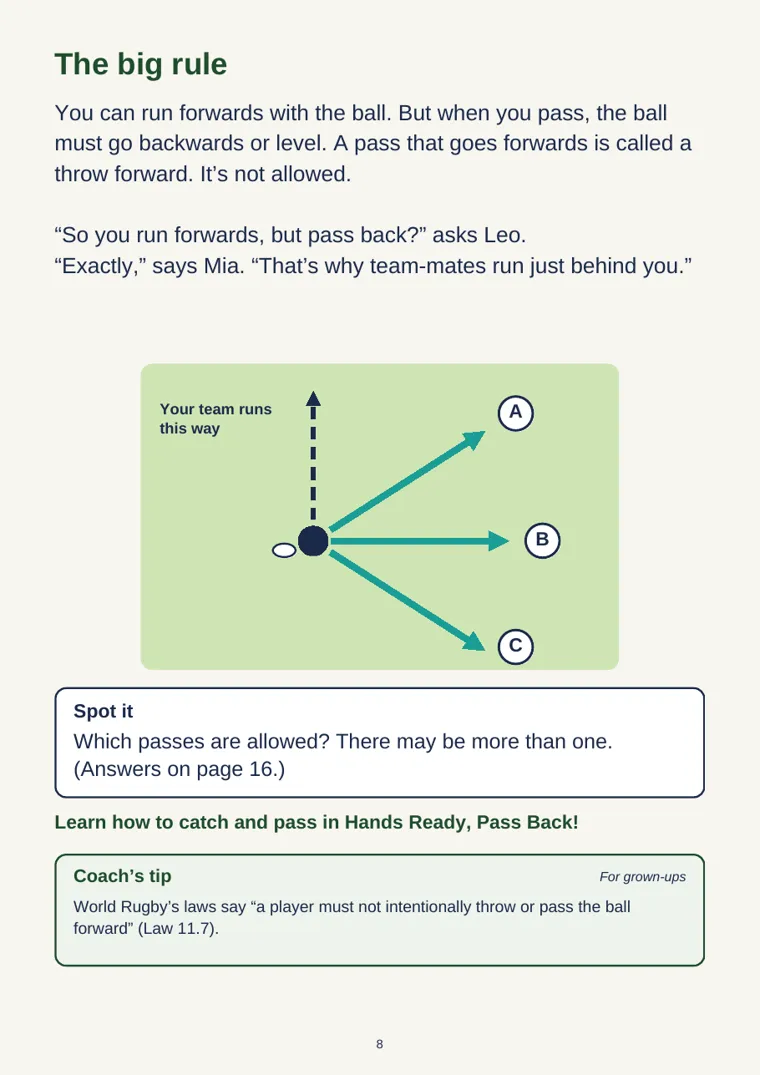
You can run forwards with the ball. But when you pass, the ball must go backwards or level. A pass that goes forwards is called a throw forward, and it's not allowed.
For grown-ups: World Rugby's laws say "a player must not intentionally throw or pass the ball forward" (Law 11.7).
Try this at home
- Stand side by side with your child, both facing the same way.
- Walk forwards together and pass the ball across, level.
- Now let your child drop a step behind you and pass again.
- Ask: "Which way did the ball go?"
Junior rugby rules vary by country, age and club, so check your club's rules for the details.